
Contents
- Connecting children to nature with Montessori
- Montessori activities for nature observation
- Treasure hunting and grassland: a Montessori adventure
- Gardening and construction of insect hotels
- Sensory awakening and artistic creation with nature
Through the Montessori pedagogy, it is possible to develop in children a personal and lasting connection with nature. This educational approach encourages not only autonomy and free exploration, but also a deep and respectful connection with our environment. By integrating practical and sensory teachings into children's daily lives, the Montessori method inspires understanding and respect for biodiversity from an early age. This model suggests an enriching and sustainable path to ecological education based on curiosity and observation. Learn how to apply these principles in your daily life.
Connecting children to nature with Montessori
The Montessori method focuses on the child's innate connection with its natural environment. Maria Montessori believed that education should enlist the various facets of the natural world to stimulate the child and awaken his mind. By engaging with nature, children learn autonomously while developing deep respect for the planet. Nature becomes a living learning ground, offering an abundance of lessons on life cycles, biodiversity and conservation.
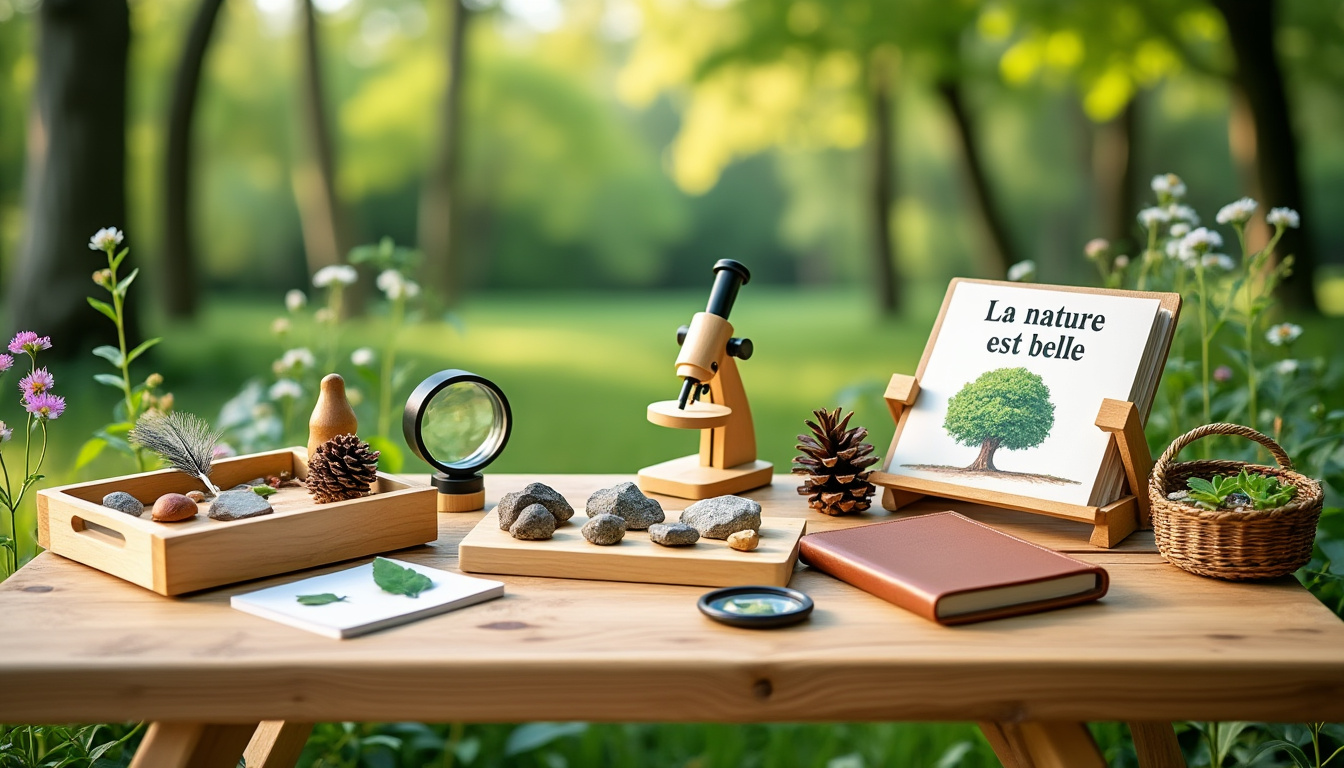
Connecting to nature is not only an outdoor activity. This can be done within small spaces or even inside. One can, for example, develop a Nature corner at home with plants, small stones or shells. This approach develops an intuitive understanding of the natural sciences, as also recommended by the site Addressing Science with the Montessori Method.
Education based on free exploration
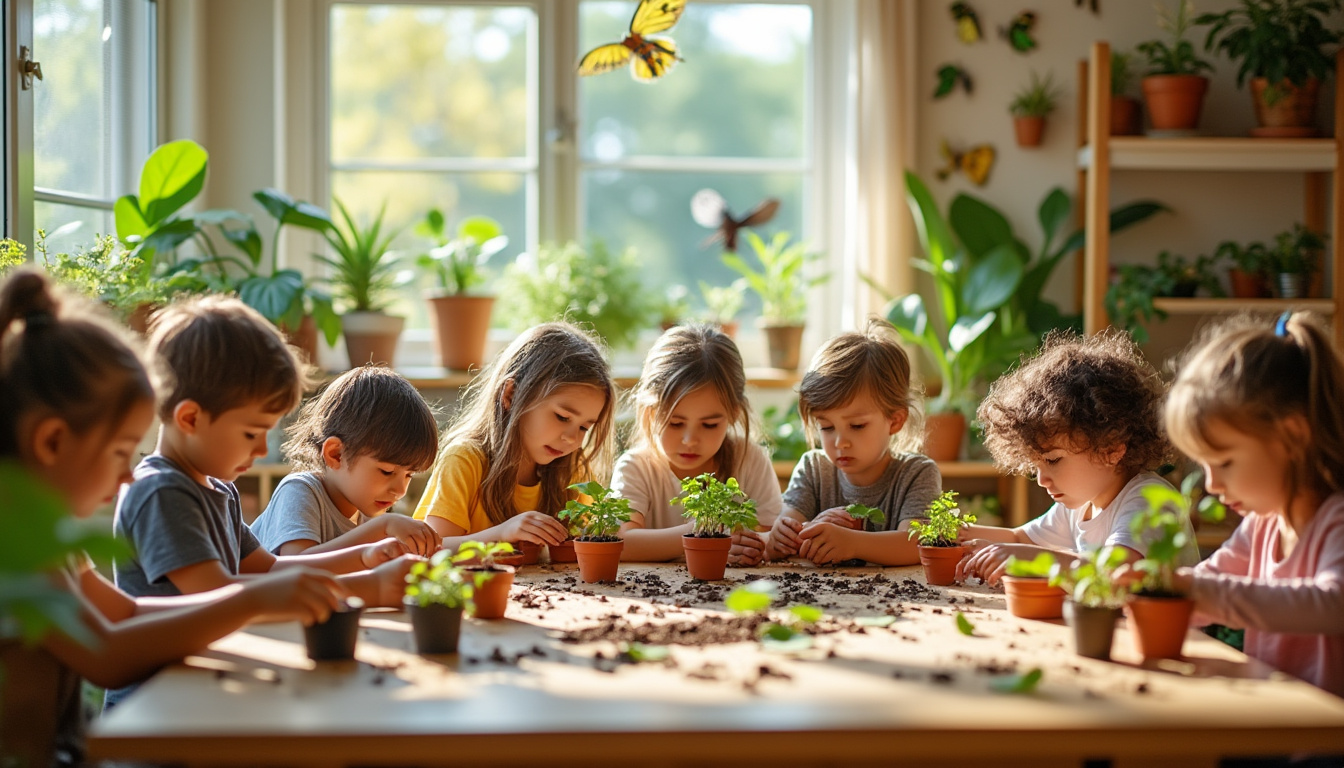
Children have a deep need for exploration. The Montessori pedagogy, with its emphasis on freedom, encourages this exploration by nature. The activities are designed to be intuitive and allow children to discover for themselves the wonders that surround them. Elementaryly, a garden, beach, or even the trail behind the house can become a laboratory of exploration.
By allowing children to choose their activities and rhythm, one feeds an autonomy that is fundamental to the discovery of the world. They can, for example, participate in a treasure hunt, where each element is an invitation to learn and understand complex concepts through the game.
Montessori activities for nature observation
Understanding and absorbing the riches of nature can be orchestrated with a series of activities and teaching materials. By combining clear educational objectives with this approach, children can be guided in their exploration while respecting their individual and intuitive rhythm. We're talking about Montessori AdventureNature, a learning method where the child becomes his own guide through curiosity and critical reflection.
The role of observation in learning
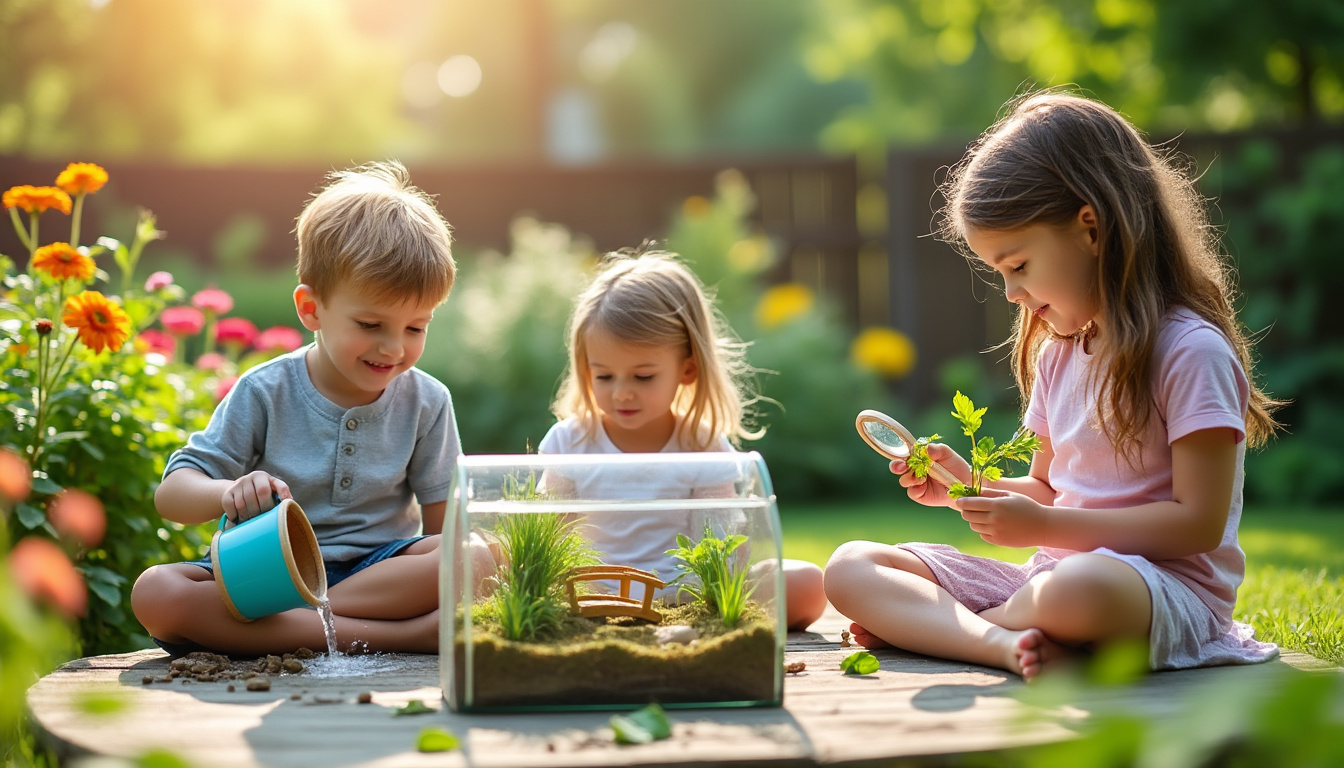
Observation is a central competence in Montessori pedagogy, supporting learning through investigation. When a child observes the development of a plant, the journey of an insect, or the alterations of the sky, he learns to make connections, thereby strengthening his cognitive abilities. Maria Montessori encouraged careful and prolonged observation, involving all senses to promote a complete absorption of natural knowledge.
Here is an example of a table showing the impact of different activities on child development:
| Activity | Cultured competence | Recommended age |
|---|---|---|
| Observation of insects | Respect for biodiversity | 3-6 years |
| Creating Nature Book | Documentation and Memory | 6-12 years |
| Gardening | Autonomy and patience | 3-12 years |
Use of Montessori equipment
To make these activities more relevant, the use of Montessori hardware adapted is recommended. For example, magnifiers can transform insect discovery into a true scientific mission. Use of adapted materials strengthens this intrinsically educational experience.
Treasure hunting and grassland: a Montessori adventure
Treasure hunts and grasslands embody emblematic activities of the Montessori approach. They combine playful learning with the development of valuable skills such as observation, ranking, and recognition of natural elements.
Organization of a treasure hunt
One Treasure hunting well thought out commits children to discover and collect various natural elements. The beauty of this adventure lies in the simplicity of its implementation. Just create a list of objects to find: leaves, stones, feathers, or shells. In season, children have fun identifying objects on the beach, pebbles or algae.
Here's how to structure a successful treasure hunt:
- Develop a list of seasonal natural elements
- Encourage exchanges on discoveries
- Promote respect for natural habitats (do not collect if it harms the environment)
- Document the experience through selected photos or samples
Creation of a herbarium
The creation of a herbarium is an activity that includes collection, classification and documentation. Through this exercise, children learn not only to recognize the various types of vegetation but also to admire the diversity of shapes and colours in the plant world. Children can also extend this activity by using botanical collections to identify plants and evoke their curiosity for the natural sciences.
Gardening and construction of insect hotels
The gardening and construction of insect hotels are two fantastic Montessori activities that allow children to awaken to biodiversity in an interactive and ecological way. These activities develop not only patience and perseverance but also an increased sense of accountability.
Family gardening
Gardening, whether in a garden, on a balcony, or in pots, instills in children a sense of connection with plant life. They feel the satisfaction of planting a seed and observing its transformation into a mature plant. This process is educational and raises their understanding of natural life cycles.
Here are some steps to successful gardening with a child:
- Choose plants adapted to climate and season
- Designing a space dedicated to culture
- Encourage the child to participate in all stages: sowing, watering, harvesting
- Use child-friendly gardening tools
See also activities tailored to the specific needs of children.
Building an insect hotel
Build a Insect hotel is a practical activity allowing children to understand the importance of insects in our ecosystem. An insect hotel is a refuge for these creatures, encouraging them to thrive in our gardens while facilitating their observation and study. Children can make these hotels using recycled and natural materials, which engages them in an ecological process from beginning to end.
Sensory awakening and artistic creation with nature
At the heart of Montessori pedagogy, senses play a crucial role in early learning. By exploring the world through their senses, children become more receptive to the elements around them, which motivates the use of nature as teaching material. By choosing activities that awaken the five senses, the overall development of the child is encouraged.
Sensory awakening by nature
Nature offers a palette of textures, sounds and colours. Let children play barefoot in a lawn or smell the various scents of flowers in a garden. These experiments, essential to the Montessori approach, arouse sensations that can only be felt in a real context, in connection with the outside world.
To begin sensory awakening at home, here are some suggestions:
- Create sensory paths in the garden (with stones, sand, leaves)
- Promote active listening to the sounds of nature (singing birds, wind)
- Use odor boxes with herbs or spices for identification sets
Artistic creation with natural elements
Finally, nature propels a rich framework to stimulate children's artistic creativity. By providing paint, glue and paper sheets, the child can produce art works with natural materials. Creating a marine landscape with shells or fall composition with dead leaves strengthens the ability of everyone to see beauty within nature.
These activities enhance not only creative skills but also respect for the environment. By offering children a multitude of ways to interact with nature, they are guided towards a lasting appreciation of the natural world around them. This perfectly embodies the concept of MontessoriEcological and RespectNatureMontessori.


